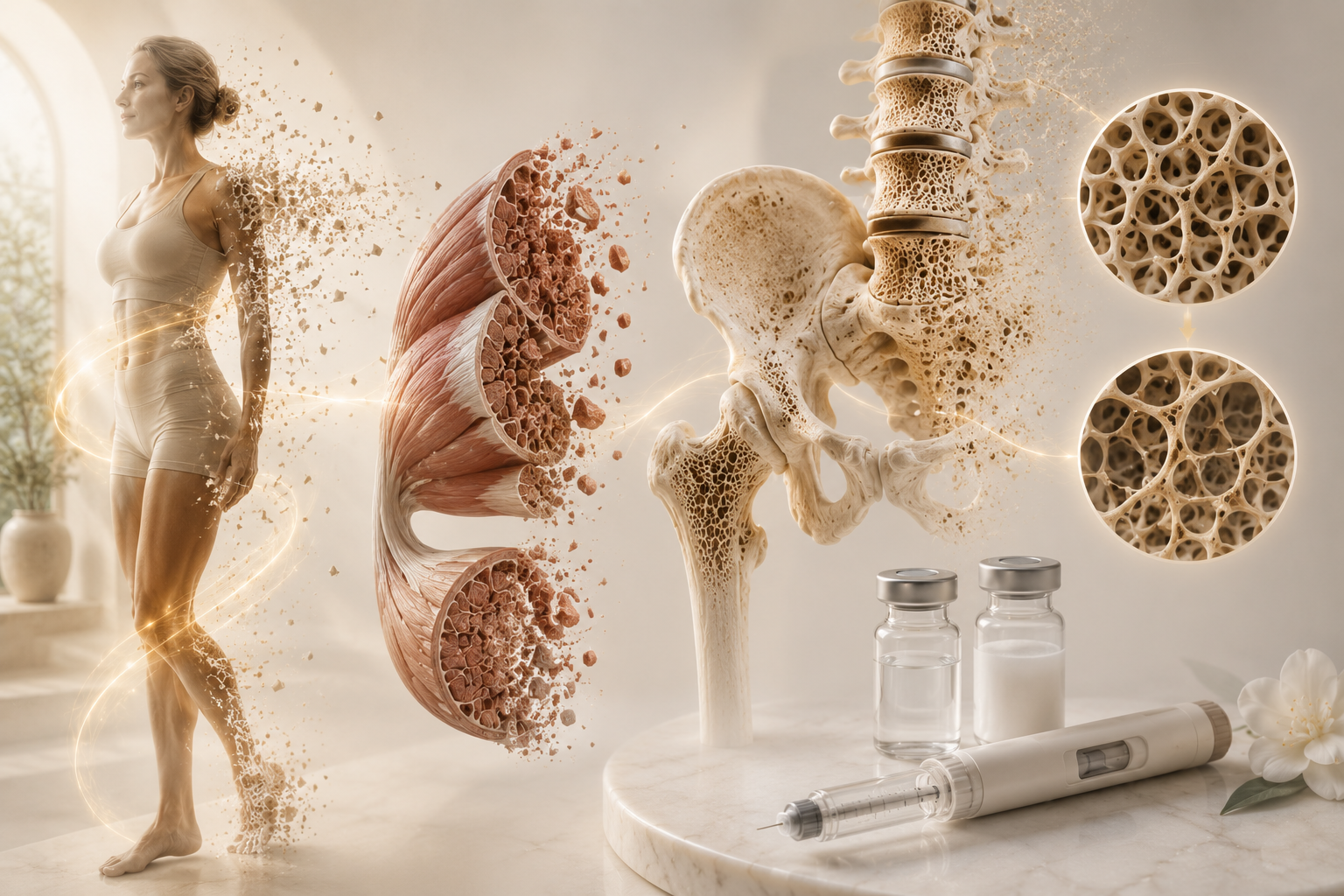
What You Need to Know Before You Decide on Medication
If you've been told you have osteopenia or osteoporosis, you were probably handed a single number: your bone density (T-score). It's important information. But it isn't the whole story.
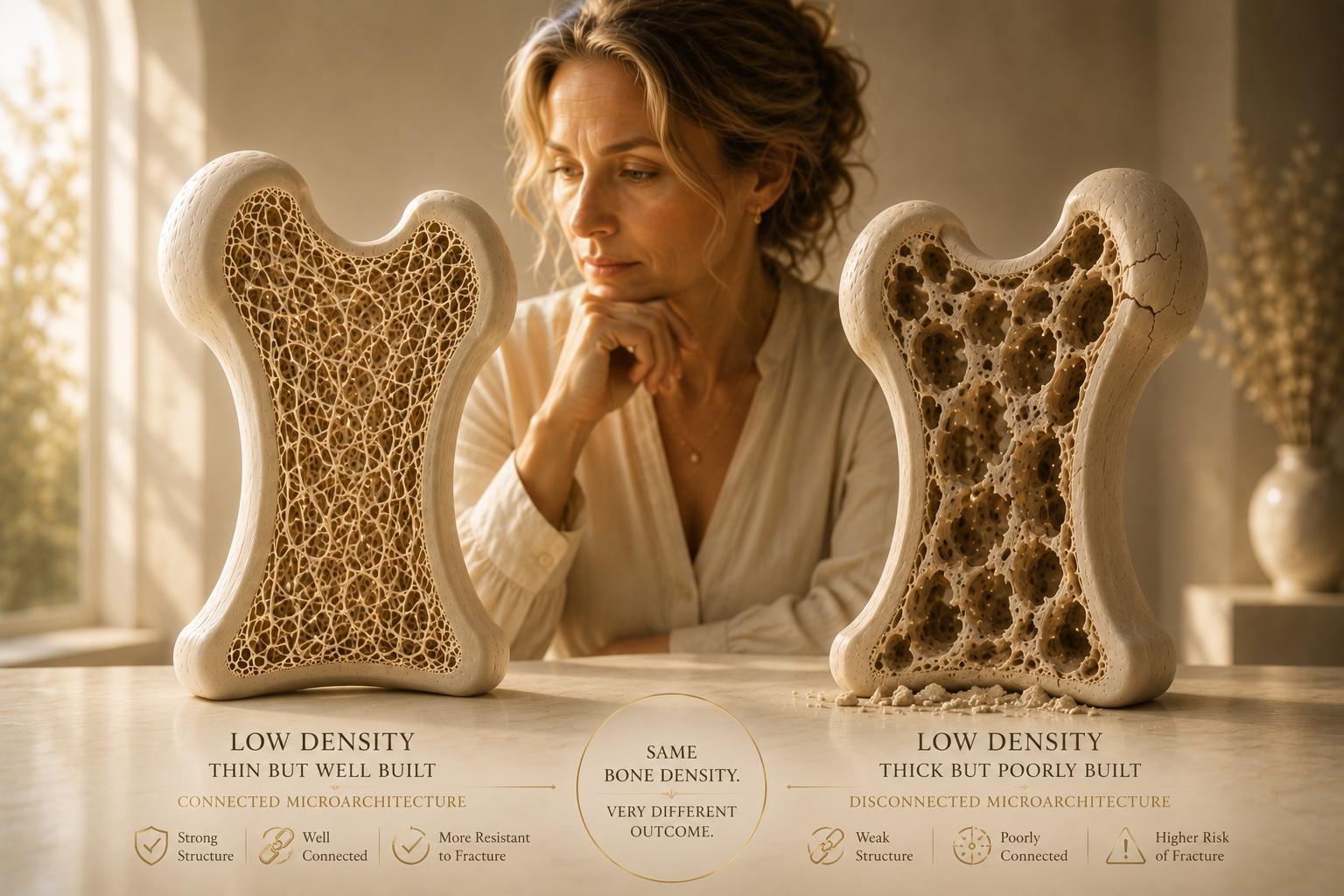
Two people can have the exact same bone density score.
One breaks a bone. The other never does.
If the number is identical, what's different?
The answer is the one thing DEXA density score doesn't capture — how well your bone is built.
Bone density isn't the same as bone strength.
Understanding the difference can help you have a more informed conversation about your bone health. And before any big decision — including one about medication — it's worth understanding. That's a conversation to have with your healthcare provider.
The Short Version
For many years, the standard bone test has been the DEXA scan. It measures bone density — how much mineral is packed into your bones.
Echolight REMS measures bone density, but it also provides information about bone quality (Fragility Score) and an estimated 5-year fracture risk.
Because having more bone doesn't always mean having stronger bone.
Bone Strength Depends on More Than Density
Imagine two houses.
They have the same blueprint and the exact same amount of concrete, lumber, and steel. From the outside, they look identical.
But they're built differently.
One has strong connections. Every beam is securely joined. The frame works together as one solid structure.
The other used the same amount of material — but the connections are weak. And over the years, termites quietly damaged the framing from the inside.
Then an earthquake hits.
One house stays standing. The other falls apart.
The difference wasn't how much material each house had. The difference was the quality of the structure.
Your bones work in a similar way. Two people can have the same amount of bone mineral( the same bone density), but one person's bones may be built with a stronger internal framework, making them more resistant to breaking in a fall.
A traditional DEXA scan measures how much mineral is packed into the bone.
REMS adds another layer of information by analyzing the bone's internal structure — how well it's built — to help provide a more complete picture of bone health.
Because it's not just how much bone you have. It's how well that bone is built.
Would you make a decision about medication — one that could alter your life — without understanding the full structure of your bones?
You deserve the complete picture first.
And this isn't theory. 70% fragility fractures happen in people whose density scores never fell into the osteoporosis range at all — by some estimates, a majority of them.
Why This Matters Before Making Decisions
If you've been diagnosed with osteopenia or osteoporosis, you'll likely be making decisions about what comes next — lifestyle changes, and medication or treatment discussions with your healthcare provider.
The more complete your understanding of your bone health, the more informed those conversations can be.
Where Echolight REMS Fits In and Why DEXA Isn't the Whole Picture
For 40 years, DEXA has been the standard for diagnosing osteopenia and osteoporosis. It still is.
But standard doesn't mean great. It's what was available 40 years ago and it's what set the baseline we still use to prescribe medication today.
There's no perfect tool yet for seeing a bone in full. REMS adds is a second read an assessment of bone quality that a density number alone can't provide. It doesn't replace your provider's judgment. It gives you and your provider more to work with.
And this isn't experimental technology.
Echolight REMS is FDA-cleared and validated across more than 40 peer-reviewed studies. In October 2024, NASA selected it as its radiation-free method for monitoring astronaut bone health.
MobileREMS is the only mobile REMS provider in Western Washington. And honestly ,I brought it here because I was one of those people whose density score didn't tell the full story. I think we all deserve that missing view.
The Bottom Line
You wouldn't buy a house by its street view alone. You'd want to know the structure underneath was sound.
Your bones deserve the same thoughtful approach.
Because bone density isn't the same as bone strength. A density score is an important starting point and a fuller assessment helps you and your provider see the rest.
Ready to see the full picture? Book a REMS Scan
Prefer to talk it through first? Schedule a free consultation — no cost, no pressure.
Not ready yet? Sign up for updates on upcoming scan events near you.
Have questions about DEXA accuracy, bone quality, or what a REMS scan measures? See our Bone Health FAQ.
This information is for educational purposes only and does not constitute medical advice, diagnosis, or treatment. REMS assessment at Longevia Health Center provides bone health data for informational purposes. Consult your healthcare provider for medical guidance.